Author: Daniel
西蒙弗雷泽大学系列杀人案件数据库(Part 1)
西蒙弗雷泽大学系列杀人案件数据库,共13宗。 Continue reading “西蒙弗雷泽大学系列杀人案件数据库(Part 1)”
【系列纵火】S4E19主题相关笔记
以下笔记摘抄自《地理学的犯罪心理画像》 Continue reading “【系列纵火】S4E19主题相关笔记”
Festivals of Japan
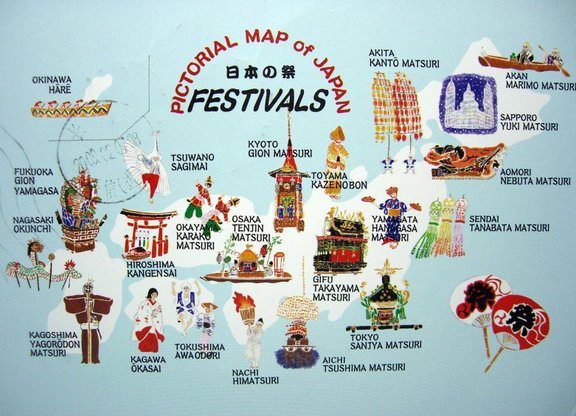
I have learned about the “Gion Matsuri 祇園祭“, an annual event in Kyoto that spans the entire July from my Japanese language class.
History of Gion Matsuri:
This festival originated as part of a purification ritual (goryo-e) to appease the gods thought to cause fire, floods and earthquakes. In 869, the people were suffering from plague and pestilence which was attributed to the rampaging deity Gozu Tennō (牛頭天王). Emperor Seiwa ordered that the people pray to the god of the Yasaka Shrine, Susanoo-no-mikoto. Sixty-six stylized and decorated halberds, one for each province in old Japan, were prepared and erected at Shinsen-en, a garden, along with the portable shrines (mikoshi) from Yasaka Shrine.
This practice was repeated wherever an outbreak occurred. In 970, it was decreed an annual event and has since seldom been broken. Over time the increasingly powerful and influential merchant class made the festival more elaborate and, by the Edo Period (1603-1868), used the parade to brandish their wealth.
In 1533, the Ashikaga shogunate halted all religious events, but the people protested, stating that they could do without the rituals, but not the procession. This marks the progression into the festival’s current form. Smaller floats that were lost or damaged over the centuries have been restored, and the weavers of the Nishijin area offer new tapestries to replace destroyed ones. When not in use, the floats and regalia are kept in special storehouses throughout the central merchant district of Kyoto in the care of the local people.
from Wikipedia http://en.wikipedia.org/wiki/Gion_Matsuri
Inspiration quotes from Criminal Minds
— from Criminal Minds
Faulkner : Don’t bother just to be better than your contemporaries or prdecessors. Try to be better than yourself.
Albert Einstein : A question that sometimes drives me hazy – am I or the others crazy?
Peter Ustinov : Unfortunately, a super-abundance of dreams is paid for by a growing potential for nightmares.
W.H Auden : Evil is unspectacular and always human. And shares our bed… and eats at our table.
George Orwell : In a time of universal deceit, telling the truth is a revolutionary act.
Milian Kundera : The basis of shame is not some personal mistake of ours, but that this humiliation is seen by everyone.
Anatole France : All changes, even the most longed for, have their melancholy. For what we leave behind us, is part of ourselves. We must die in one life, before we can enter another.
Ernest Hemingway : A man can be destroyed but not defeated.
Samuel Beckett : Try again. Fail again. Fail better.
Yoda : Try not. Do or do not.
Samuel Johnson : Almost all absurdity of conduct arises from the imitation of those whom we cannot resemble.
Mexican Proverb : La casa no se reclina sobre la tierra, sino sobre una mujer.
刘颖去死!!!
我喜欢脱衣舞,因为脱衣舞起码坦白,观众想看胸部和屁股,你直接露给他们就可以了。而有的心怀鬼胎的老师,目的是害人,只是多了教育做幌子。我说的是吉林省第二实验学校初中部教地理的刘颖。
 Blooming Flowers